Minnesota Bathroom Remodel Cost Estimator & Timeline
A Minnesota bathroom remodel typically runs from a few thousand dollars for a shower swap to well over $25,000 for a full gut. Timelines range from a long weekend to four or five weeks. This guide shows what drives the number and how to estimate your own.
Call now — matched to remodelers in your ZIP
Who this guide is for and what you're deciding
You want a clear number and a realistic calendar before anyone sets foot in your home. Most Minnesota callers describe the same handful of projects: replacing a tired tub-shower combo with a new shower, swapping a bathtub, adding new countertops and a toilet, or gutting the room down to the studs.
Some people want a remodel for looks. Others want it for safety — a curbless entry, grab bars, or a lower step-in after a fall or a knee replacement. Both are valid, and they change the budget in different directions. A safety-focused walk-in shower can cost less than a designer remodel, or more, depending on the fixtures.
This page helps you decide three things:
- Scope: a like-for-like fixture swap, a partial refresh, or a full remodel.
- Budget tier: where your wish list lands in real published ranges.
- Timeline: how many days or weeks your household loses the bathroom.
You do not need to know exact prices to start. You need to know which choices move the number, so you can talk to an estimator without surprises. When a company sends someone out to measure and price your project, that visit is how they build an accurate figure — the reader always makes the first call. Calls to matched providers may be recorded.
If you are weighing one project against another — say a walk-in shower against keeping a tub — our walk-in shower vs. tub guide covers that decision in depth.
What Minnesota homeowners misunderstand about remodel cost
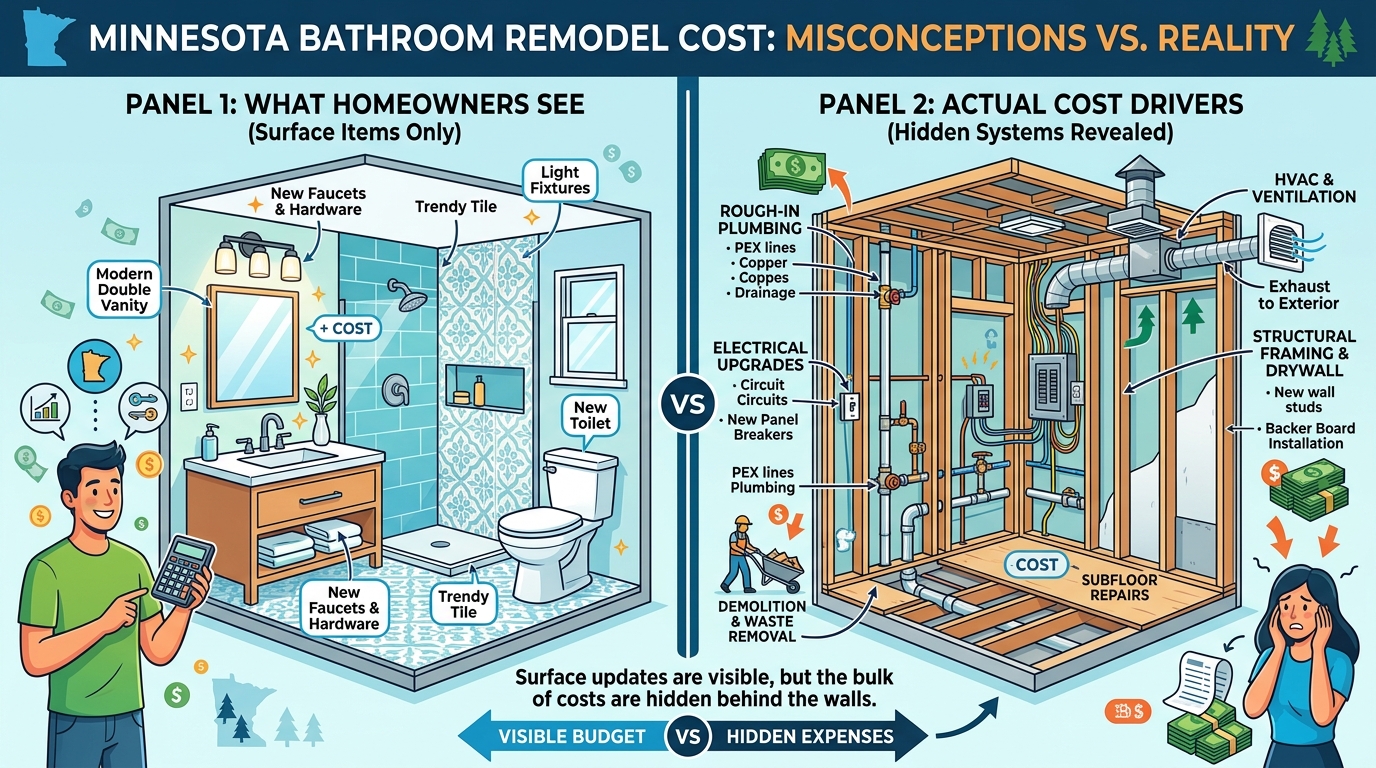
The biggest misunderstanding is treating "bathroom remodel" as one price. It is not. The word covers everything from a one-day acrylic shower liner to a four-week structural rebuild, and those differ by more than ten times in cost.
Labor is the hidden majority of the bill. On a full remodel, materials often account for less than half the total. The rest is skilled labor: demolition, plumbing, electrical, tile-setting, and finish work. That is why two projects with identical fixtures can price very differently — the labor behind the walls varies.
What actually moves the number
- Whether you move plumbing. Keeping the toilet, sink, and drain in their existing spots is the single biggest way to hold cost down. Relocating a drain means opening the floor.
- Tile versus panels. Custom tile is labor-intensive. Solid acrylic or cultured-stone wall panels install faster and cost less in labor.
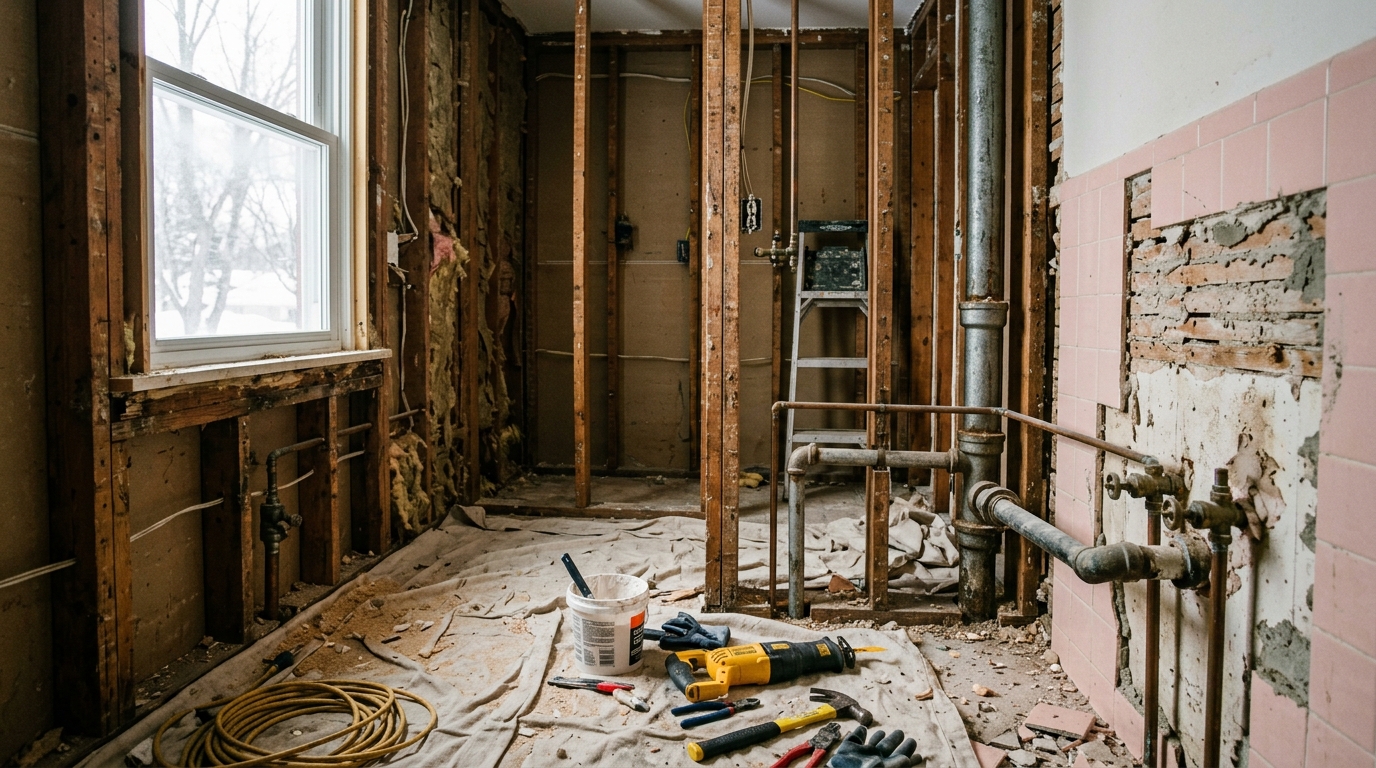
- Hidden damage. In Minnesota, freeze-thaw cycles and long shower seasons feed moisture problems. Rotted subfloor or mold behind a surround is common and is rarely visible until demolition.
- Fixture grade. A builder-grade toilet and a high-end wall-hung unit both flush, but the price gap is large.
The "cost per square foot" trap
Bathrooms are small, so per-square-foot math misleads. A cramped 5-by-8 bath can cost more per square foot than a large one because the fixed costs — permit, plumber trip, tile setup — spread across fewer feet. Judge by scope and fixture list, not floor area.
For a national picture of ranges and what shifts them, see our bathroom remodel cost guide. This page keeps the focus on Minnesota conditions and timelines.
Signs your bathroom needs more than a cosmetic update
Many callers start by saying they want to "redo the shower" and discover the real problem runs deeper. Knowing the difference tells you whether you are buying a surface refresh or a structural fix.
Warning signs of hidden damage
- Soft or spongy floor near the tub or toilet. This points to a leak that has already reached the subfloor.
- Persistent musty smell that cleaning does not remove. Mold often grows behind surrounds and under vinyl.
- Dark grout lines or peeling caulk that return within weeks of cleaning. Water is getting behind the surface.
- Tiles that flex or sound hollow when tapped — a sign the substrate has failed.
- Running toilet or a wobble at the base, which can mean a bad wax ring and slow leak.
Mold matters in Minnesota specifically. Long heating seasons keep bathrooms humid, and homes are sealed tight against cold, so moisture lingers. The U.S. EPA notes that indoor mold grows wherever moisture stays, and the fix is removing the water source, not just scrubbing. A remodel that skips the moisture cause will simply grow the same mold behind new walls.
Signs it is a cosmetic job
If the structure is sound and you dislike the color, layout, or dated fixtures, you are in refresh territory. New vanity, mirror, lighting, paint, and a re-glazed or replaced tub can transform the room without opening walls. These jobs finish fast and cost the least.
The test: press firmly around fixtures and edges. Firm, dry, odor-free surfaces suggest cosmetic work. Any softness, smell, or recurring water stain suggests you budget for what is behind the wall too.
What actually works — methods and typical timelines
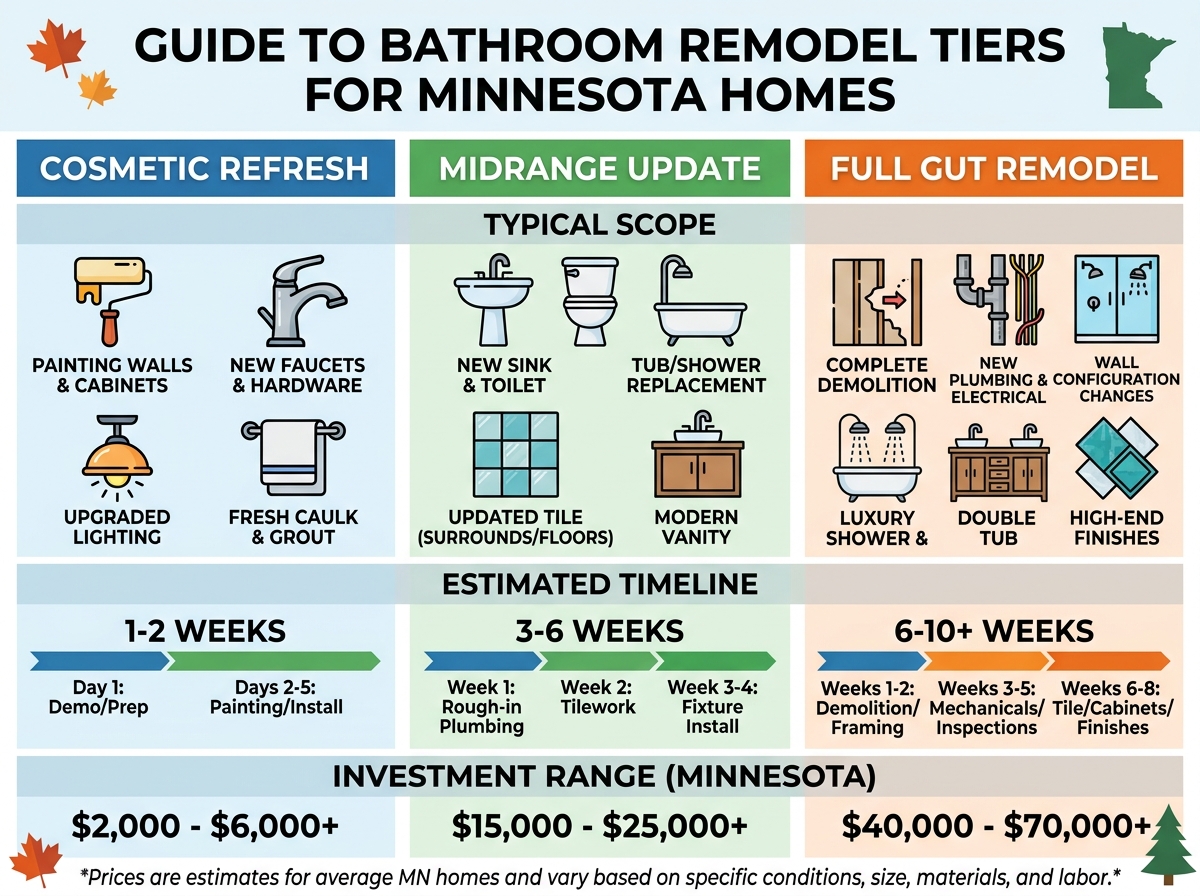
Minnesota projects fall into four common paths. Each has a distinct method, cost tier, and calendar.
1. Acrylic or solid-surface shower/tub replacement (1–3 days)
A prefabricated wall system installs over prepared walls. Crews remove the old surround, check the substrate, and fit panels and a new base or tub. This is the fastest path and a frequent choice for a tub-shower combo that has cracked or leaks. See our shower replacement guide for options and questions to ask.
2. Tub-to-shower conversion (2–5 days)
The tub comes out; a low-threshold or curbless shower goes in. Timeline stretches if the drain must move from a tub location to a center shower drain. This is the most requested safety upgrade.
3. Partial remodel — new shower, countertops, toilet (1–2 weeks)
This matches a very common Minnesota request: replace the tub-shower combo, add new countertops, and set a new toilet, without moving plumbing. Multiple trades coordinate, so scheduling drives the calendar more than the work itself.
4. Full remodel to the studs (3–5 weeks)
Everything comes out. New layout, plumbing rough-in, electrical, waterproofing, tile, and finishes go in stages, with inspection holds between them. Custom tile and moved plumbing push toward the long end.
Why timelines stretch
- Inspections pause work until a city inspector signs off on rough plumbing and electrical.
- Material lead times — a special-order vanity or tile can add a week or more.
- Curing and drying — thinset, mortar, and waterproofing membranes need time before the next step.
- Discovered damage resets the clock when rot or mold appears at demolition.
A prefab system wins on speed; custom tile wins on look and lasts decades when installed over a proper waterproof membrane.
When DIY is enough and when to call a professional
The honest line is drawn by water and code, not by ambition. Get either wrong and a cheap job becomes an expensive one.
Reasonable DIY for a confident homeowner
- Painting and installing a new mirror, towel bars, or a light fixture (with power off).
- Swapping a faucet or showerhead on existing valves.
- Re-caulking a tub or shower joint.
- Replacing a toilet seat or a simple vanity that reuses existing plumbing.
Call a professional when
- You are moving water lines or drains. Drain slope and venting are code-governed; a bad slope causes chronic clogs, and a bad vent lets sewer gas in.
- Waterproofing is involved. A shower that is not properly membraned will leak into the framing within a few years, no matter how good the tile looks.
- You found mold or rot. Structural repair and safe mold removal are not weekend tasks.
- Electrical is near water. Minnesota code requires GFCI protection in bathrooms; new circuits need a licensed electrician and a permit.
- You want it done fast and once. A trained crew finishes a shower system in days that would take a homeowner weeks.
Permits in Minnesota
Minnesota adopts a statewide building code, but permits are issued locally by your city or county. As a rule, plumbing and electrical changes and any structural work require a permit and inspection; cosmetic swaps usually do not. Pulling a permit protects resale value — unpermitted work can complicate a future sale.
Not sure how to vet a crew? Our remodeler vetting checklist lists the licenses, insurance, and warranty questions to confirm before signing.
Minnesota-specific factors that change your estimate
Local climate and construction habits shift both cost and method. Four Minnesota realities matter.
Cold-climate moisture and ventilation
Homes built tight for winter trap humidity. A remodel should include a properly sized, vented exhaust fan that discharges outside — not into the attic, where it feeds condensation and mold. Upgrading undersized ventilation is a small line item that prevents the biggest long-term failure.
Freeze risk on exterior walls
Plumbing on an exterior wall can freeze in a Minnesota winter. If your remodel relocates a supply line to an outside wall, insulation and line placement become a real design concern, and that adds labor.
Older housing stock
Many Minnesota homes date to the mid-20th century or earlier. Expect galvanized supply pipes, cast-iron drains, and undersized electrical near the vanity. Bringing these up to current code during a remodel adds cost but is often unavoidable once walls are open.
Seasonal scheduling
Demand and lead times are not flat year-round. Interior work continues through winter, but material delivery and crew availability can tighten during peak remodeling months. Booking in a shoulder season sometimes shortens the wait.
Radon and floor work
Radon is common in Minnesota soils. If your project opens the slab or subfloor, it is a sensible moment to confirm your radon situation with the Minnesota Department of Health's guidance. It rarely changes a bathroom budget, but the open floor is the easy time to address any mitigation routing.
None of these should scare you off. They explain why an in-home measurement gives a truer number than any online calculator — an estimator sees your walls, pipes, and ventilation before quoting.
Cost factors: what drives the price in Minnesota
We will not invent a single price for your bathroom, because an honest number depends on your fixtures and what is behind your walls. Instead, here is how to read the published ranges and estimate your own tier.
The factors, ranked by impact
- Scope — a fixture swap versus a full gut is the largest swing, easily a ten-fold difference.
- Plumbing relocation — keeping fixtures in place versus moving drains can shift the total by thousands.
- Surface choice — acrylic panels are the value tier; porcelain or natural-stone tile sits higher because of labor.
- Fixture grade — builder-grade to premium fixtures widen the gap on toilets, faucets, and vanities.
- Hidden repairs — rot, mold, outdated pipes, or electrical upgrades add cost only revealed at demolition.
- Accessibility features — curbless entries, grab-bar blocking, and benches add material and labor.
How to build your own estimate
Start with your scope tier. Add up your fixture wish list at the grade you want. Then set aside a contingency — professionals commonly reserve 10 to 20 percent for surprises, and older Minnesota homes justify the higher end. That contingency is not waste; it is the money that covers the soft subfloor no one could see.
Getting an accurate figure
An in-home measurement turns these factors into a firm number. The estimator checks your substrate, plumbing runs, ventilation, and electrical, then prices your exact list. You initiate that visit when you are ready. For a deeper look at ranges by project type, our full bathroom remodel guide breaks scope into budget tiers, and the tub-to-shower conversion page covers that specific upgrade's cost drivers.
Common questions
Do I need a permit for a bathroom remodel in Minnesota?
Usually yes for plumbing, electrical, or structural changes, since Minnesota follows a statewide code enforced locally. Cosmetic swaps like paint, a mirror, or a like-for-like faucet generally do not need one. Your city or county building department issues and inspects permits.
How long will my bathroom be out of service?
A prefab shower or tub swap can be done in 1 to 3 days. A partial remodel with new shower, countertops, and toilet runs about 1 to 2 weeks. A full remodel to the studs typically takes 3 to 5 weeks, longer if plumbing moves or damage is found.
Can I keep the cost down without cutting quality?
Yes. Keep fixtures in their existing plumbing locations, choose acrylic or solid-surface walls over custom tile, and select mid-grade fixtures that carry solid warranties. The largest savings come from not moving drains and supply lines.
Is this remodel for looks or for safety — and does that change the price?
It changes it in either direction. A safety-focused walk-in shower with a low or no threshold can cost less than a designer remodel, or more if you add benches, grab-bar blocking, and premium controls. Decide your goal first, then match fixtures to it.
Why can't a website give me an exact price?
Because much of the cost hides behind the walls — subfloor condition, pipe material, ventilation, and electrical. In Minnesota's older, tightly sealed homes, those unknowns are common. An in-home measurement prices your exact fixtures and reveals what a calculator cannot.
What if the crew finds mold or rot during demolition?
It is common with Minnesota's long humid heating season. A responsible remodel removes the moisture source, replaces damaged material, and improves ventilation before new surfaces go in. Set aside a 10 to 20 percent contingency so a discovery does not stall the project.
Related: bathroom remodel cost guide · full bathroom remodel guide · tub-to-shower conversion page · remodeler vetting checklist · walk-in shower vs. tub guide
Call now — matched to remodelers in your ZIP